Precision in the wild is our default setting.
We don't just build dashboards; we centralize chaos. Operating at the intersection of raw sensor data and human decision-making, our engineering is rooted in high-frequency data handling, geospatial accuracy, and delivering consumer-grade clarity to complex industrial operations. Environmental monitoring demands more than data collection - it demands reliability where connectivity fails, precision where conditions are unpredictable, and performance where the stakes are operational. We've built systems processing millions of sensor readings daily across distributed field networks, designed to remain live when infrastructure doesn't cooperate. Our approach combines time-series ingestion architecture, sub-second geospatial query performance, and zero-downtime deployment practices - because in field environments, unavailability is not a tolerable condition.
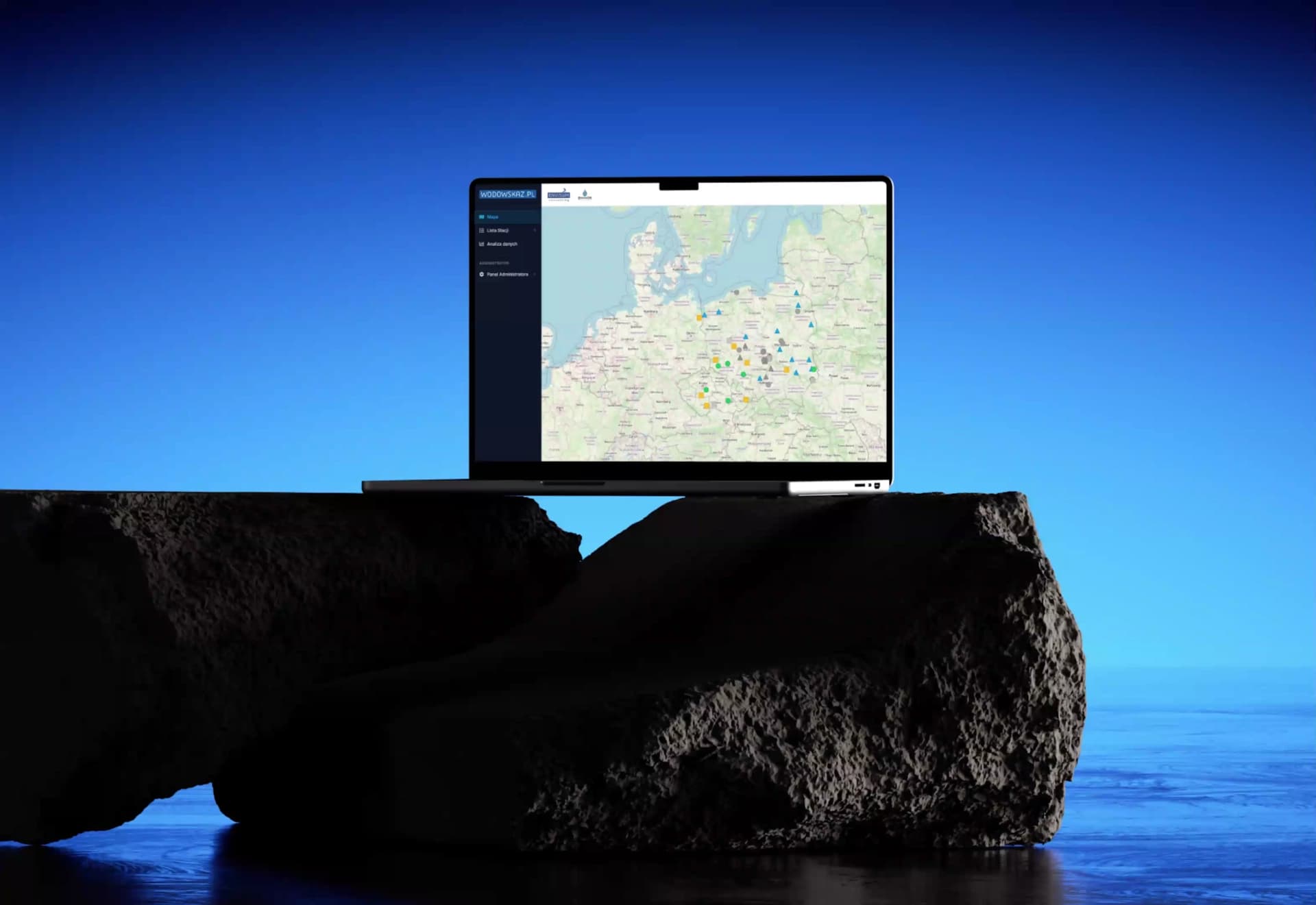
Wodowskaz
Centralizing fragmented telemetry data into a real-time decision system for nationwide monitoring.
Our Approach
The Intelligence Framework.
Discovery & Data Audit
We map every physical sensor, protocol, and data gap before a single interface component is designed.
Geospatial Architecture
Coordinate systems, tile infrastructure, and spatial data models structured around your exact field topology.
Interface Engineering
High-density UX built for operators in the field - clarity under pressure, zero ambiguity.
Real-Time Production
Live deployment with continuous sync, monitoring, and zero-downtime operations from day one.
Specialized Expertise
Deep-Dive Capabilities.
- 01Interactive Telemetry Dashboards
High-performance control panels that render millions of sensor readings into instant decision clarity.
- 02Geospatial Data & Mapping
Live map layers tracking every node across any terrain - from river gauges to remote field stations.
- 03Consumer-Grade Industrial Interfaces
Industrial complexity wrapped in interfaces that operators understand at a glance.
Common Questions
Frequently Asked Questions.
We work across the full spectrum of environmental monitoring hardware - water level gauges, weather stations, soil sensors, camera systems, air quality monitors, and custom IoT devices. On the data side, we handle MQTT, REST, LoRaWAN, Modbus, and proprietary manufacturer protocols. If a device can transmit data, we can build an integration layer for it.
Deployment timelines depend on the number of data sources, the complexity of existing infrastructure, and the scope of the interface. A focused MVP - connecting a defined set of sensors to a production-grade dashboard - typically takes 8 to 16 weeks. We structure delivery in phases so you have working software at each milestone, not just at the end.
Yes. We have experience building integration layers that sit alongside or on top of existing SCADA deployments without replacing them. Our approach is additive - we connect to your existing data exports, APIs, or direct device feeds and build the visualization and alerting layer on top. You don't need to decommission anything to get started.
Field reliability is a core design constraint for us, not an edge case. Every system we build is designed to handle intermittent connectivity gracefully - buffering data locally during outages, reconciling gaps on reconnection, and surfacing data quality indicators in the interface. Operators always know the difference between a "no reading" and a "bad reading".
We offer structured post-launch agreements that include performance monitoring, infrastructure health checks, and response SLAs for critical systems. For environmental monitoring platforms specifically, we can also provide proactive alerts on data ingestion anomalies - flagging sensor issues before they impact your operations.
Most agencies build to specification. We build from field context. Our team has direct experience engineering environmental data systems, which means we understand the constraints - unreliable hardware, inconsistent data formats, operator workflows under pressure - before the design phase begins. That experience is embedded in our architecture decisions, not documented as assumptions.
A major strength of Silentbits is their deep technical expertise and ability to translate complex challenges into business-oriented solutions. The system operates reliably, is fast, and very well designed from a user experience perspective.